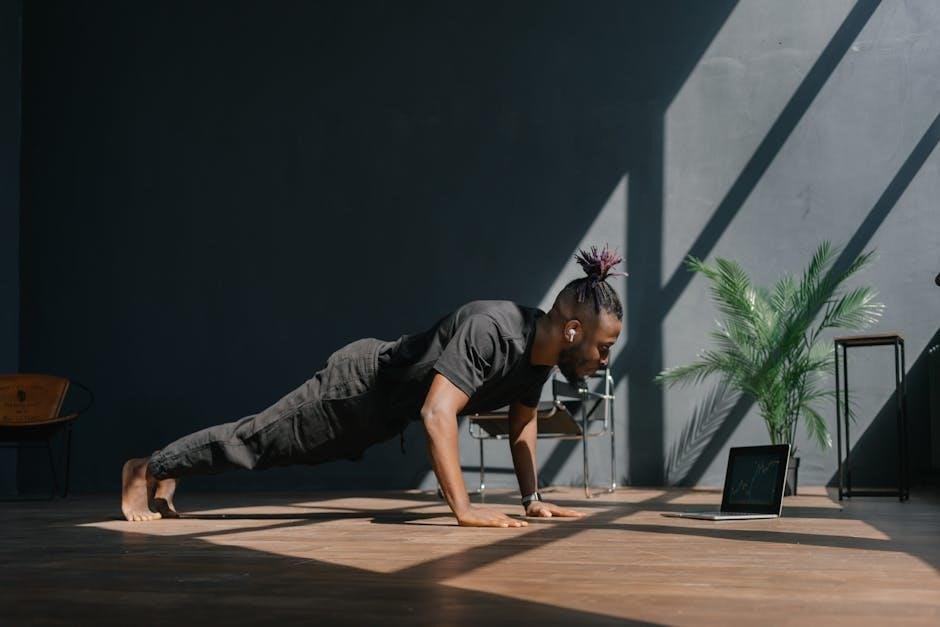
Bodyweight Workout Program PDF: A Comprehensive Guide
Discover effective fitness with a bodyweight workout program PDF, offering accessible routines for all levels – no gym needed, just results!
Bodyweight training utilizes your own weight as resistance, offering a remarkably versatile and accessible path to fitness. Forget expensive gym memberships and complicated equipment; this method empowers you to build strength, endurance, and flexibility virtually anywhere. A bodyweight workout program PDF simplifies this process, providing structured routines for all fitness levels.
From foundational exercises like push-ups and squats to more advanced movements like pistol squats and pull-ups, the possibilities are endless. This approach is ideal for beginners, allowing progressive overload through variations and increased repetitions. It’s also perfect for experienced athletes seeking a challenging and convenient workout option. Embrace the power of your own body and unlock your fitness potential!
Benefits of a Bodyweight Workout Program
A bodyweight workout program PDF unlocks numerous advantages for your health and fitness. Primarily, it’s incredibly convenient – no gym required! This accessibility removes barriers to exercise, fitting seamlessly into busy lifestyles. Beyond convenience, bodyweight training enhances functional strength, improving everyday movements.
It boosts core stability, crucial for injury prevention and posture. Furthermore, these workouts improve cardiovascular health and increase muscular endurance; A well-structured PDF program allows for scalable difficulty, catering to all levels. It’s a cost-effective solution, promoting a healthier lifestyle without financial strain, making fitness attainable for everyone.
Essential Equipment (Minimalist Approach)
The beauty of a bodyweight workout program PDF lies in its minimalist equipment needs. Truly, your body is the primary tool! However, a few inexpensive items can enhance your experience. A quality exercise mat provides cushioning and comfort, protecting joints during floor exercises. Resistance bands add versatility, increasing intensity and targeting different muscle groups.
A sturdy chair or bench can be utilized for exercises like dips or step-ups. A pull-up bar, if accessible, expands upper body options. The focus remains on utilizing your own weight, making this approach highly adaptable and affordable. A PDF guide will detail how to maximize these simple tools.
Warm-up Routine for Bodyweight Exercises
Prior to any bodyweight workout program PDF routine, a dynamic warm-up is crucial. Begin with 5 minutes of light cardio, like jogging in place or jumping jacks, to elevate your heart rate. Follow this with dynamic stretches – arm circles, leg swings, torso twists – preparing muscles for movement.
Include exercises mimicking the workout, performed at a lower intensity. For example, if squats are planned, do bodyweight squats slowly. A proper warm-up increases blood flow, improves flexibility, and reduces the risk of injury. Your PDF should detail a specific warm-up sequence for optimal results.
Core Bodyweight Exercises
A solid bodyweight workout program PDF centers around foundational exercises. Push-ups build upper body strength, with variations for all levels. Squats target legs and glutes, improving lower body power. Lunges enhance balance and unilateral strength. The plank is essential for core stability, engaging multiple muscle groups simultaneously.
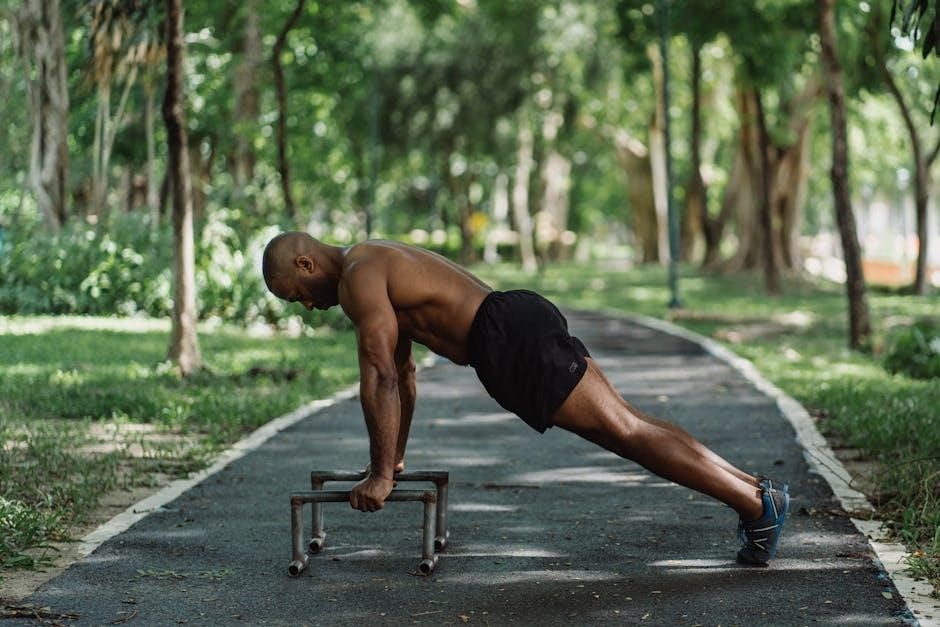
These exercises require no equipment, making them ideal for home workouts. Your PDF should provide detailed instructions on proper form for each exercise, alongside modifications for beginners and progressions for advanced users. Mastering these core movements forms the basis of a successful fitness journey.
Push-ups: Variations and Progression
A comprehensive bodyweight workout program PDF must detail push-up progressions. Beginners can start with wall push-ups or knee push-ups, reducing the load. Standard push-ups build foundational strength. Variations like wide-grip push-ups target the chest, while close-grip push-ups emphasize triceps.
To progress, consider decline push-ups (feet elevated) for increased difficulty. Your PDF should illustrate proper form to avoid injury. Include sets and rep ranges for each variation. Advanced users can explore plyometric push-ups for explosive power. Consistent progression is key to maximizing results and avoiding plateaus.
Squats: Form and Modifications
A well-structured bodyweight workout program PDF prioritizes proper squat form. Maintain a straight back, chest up, and core engaged. Descend as if sitting into a chair, keeping knees aligned with toes. Beginners might benefit from box squats, using a chair for depth guidance.
Modifications include wall sits for isometric strength and partial squats to build foundational stability. Progress to full squats, then add variations like jump squats for power. Your PDF should emphasize controlled movements and highlight common form errors to avoid. Consistent practice builds lower body strength and endurance.
Lunges: Different Types and Benefits
A comprehensive bodyweight workout program PDF should detail various lunge types. Forward lunges build quadriceps and glutes, while reverse lunges emphasize glute activation and balance. Walking lunges increase cardiovascular demand and improve coordination. Lateral lunges target inner and outer thighs, enhancing hip stability.
Your PDF should illustrate proper form – a 90-degree angle in both knees – and offer modifications. Shorter lunges reduce strain, while adding a twist increases core engagement. Lunges are fantastic for unilateral strength, addressing imbalances and improving functional fitness. Prioritize controlled movements for optimal results.
Plank: Techniques and Holding Time
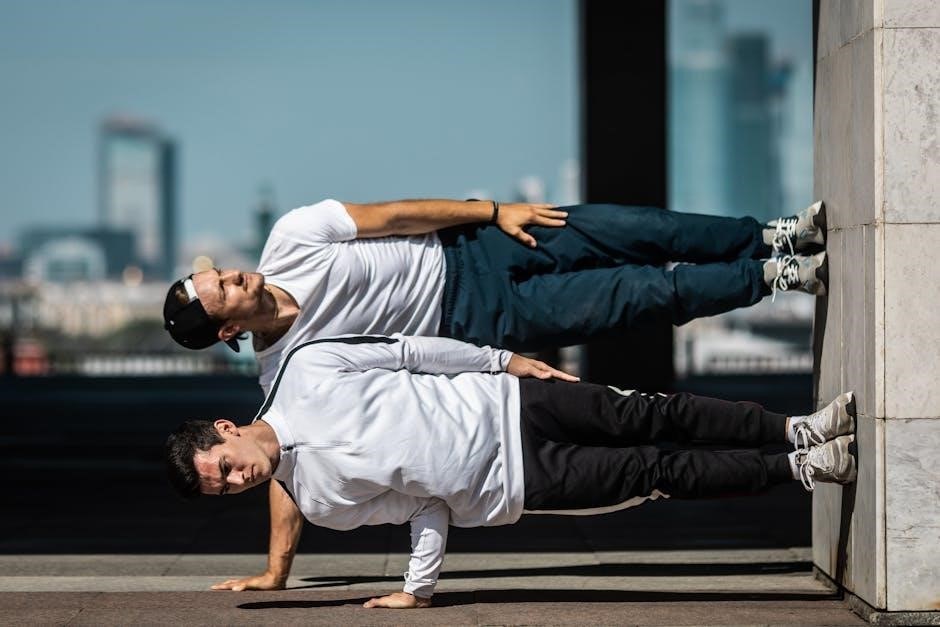
A well-structured bodyweight workout program PDF must cover the plank, a foundational exercise for core strength. Proper technique involves maintaining a straight line from head to heels, engaging the core, and avoiding hip sagging. Variations like forearm planks and side planks add complexity.
Beginners should aim for 30-second holds, gradually increasing duration as strength improves. Advanced practitioners can strive for 60-90 second holds, or incorporate plank taps and lifts. Your PDF should emphasize quality over quantity; a shorter, perfectly executed plank is superior to a longer, compromised one. Focus on breathing and maintaining form.
Intermediate Bodyweight Exercises
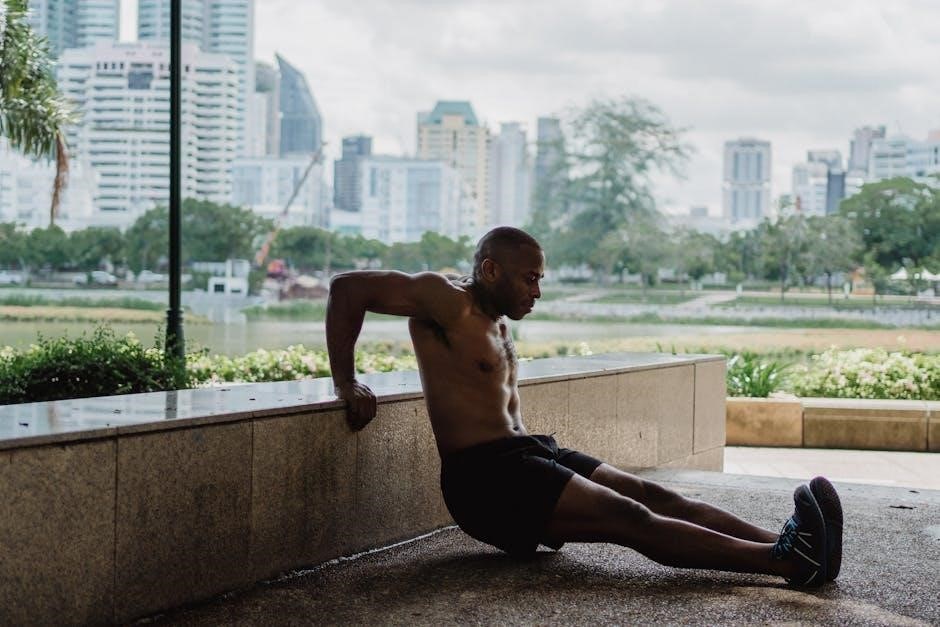
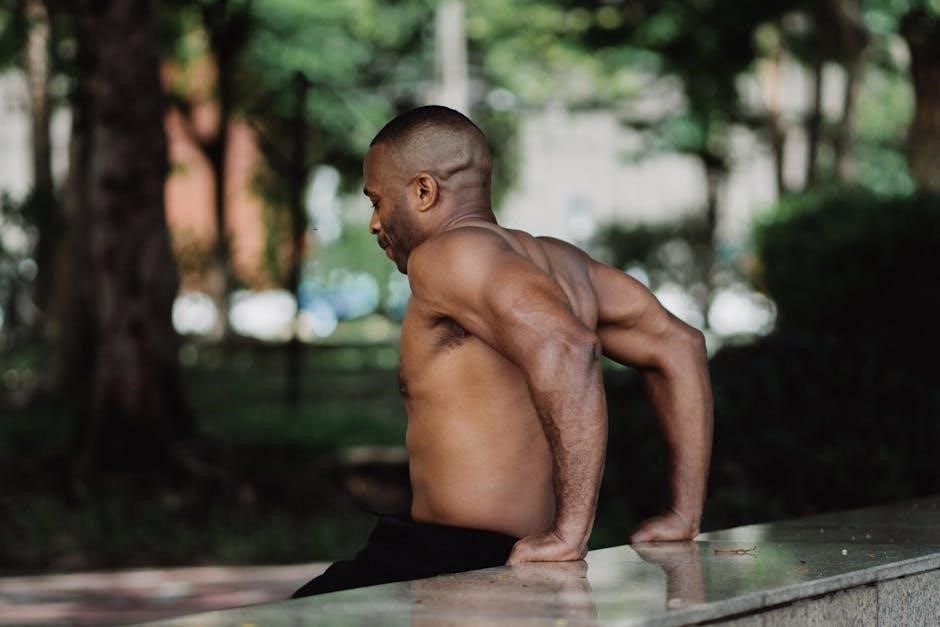
A comprehensive bodyweight workout program PDF for intermediate fitness levels introduces challenging exercises building upon foundational movements. Pull-ups (or assisted variations) dramatically enhance upper body strength, targeting back and biceps. Dips, utilizing parallel bars or a sturdy chair, effectively work the triceps and chest muscles.
Pistol squats, a single-leg squat, represent an advanced lower body challenge demanding significant strength and balance. Your PDF should detail proper form for each exercise, including modifications for those still developing strength. Progressing to these movements unlocks new levels of fitness and functional strength.
Pull-ups (or Assisted Pull-ups): Building Upper Body Strength
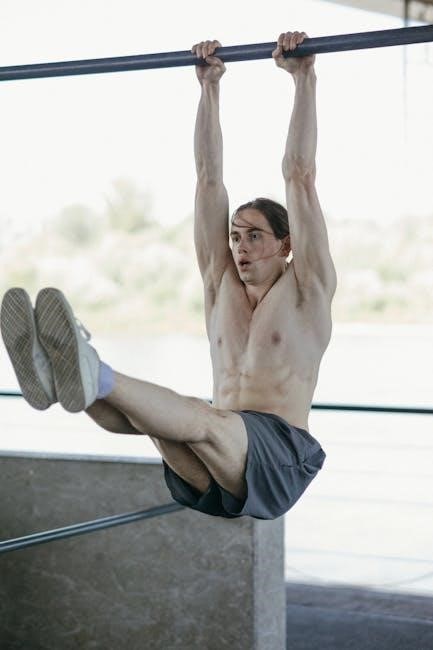
A well-structured bodyweight workout program PDF recognizes pull-ups as a cornerstone of upper body development. Targeting the back, biceps, and forearms, they demand significant strength. For beginners, assisted pull-ups – using resistance bands or an assisted pull-up machine – are crucial for building foundational strength.
Your PDF should illustrate proper form: a full range of motion, controlled ascent, and slow descent. Progress gradually, increasing repetitions or decreasing assistance as strength improves. Mastering pull-ups translates to improved posture, enhanced functional strength, and a visibly stronger upper body.
Dips: Targeting Triceps and Chest
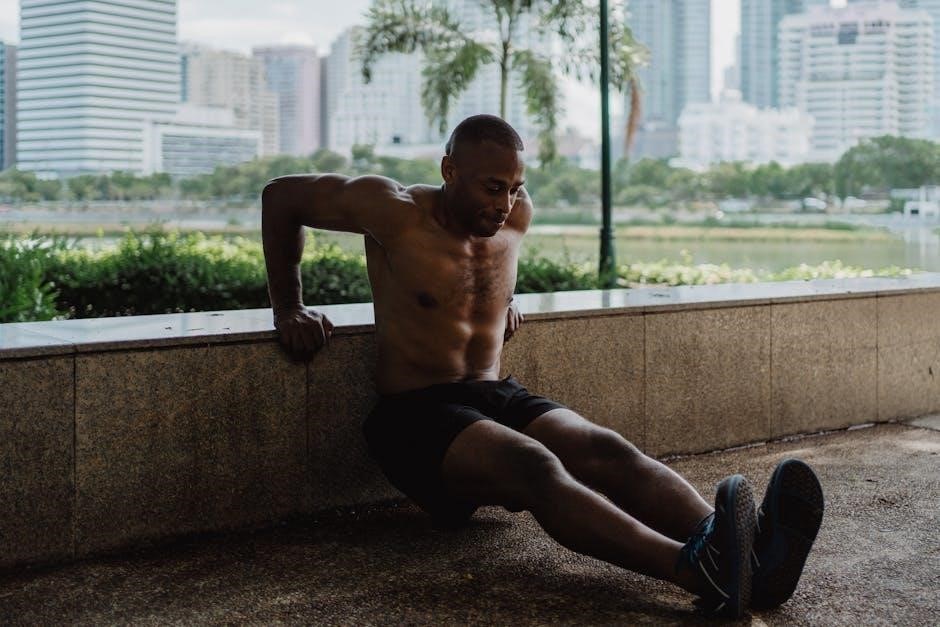
A comprehensive bodyweight workout program PDF shouldn’t overlook dips, a powerful exercise for sculpting the triceps, chest, and shoulders. Utilizing parallel bars or sturdy chairs, dips require controlled lowering and pushing. Beginners may find assisted dips – using a resistance band for support – a more accessible starting point.
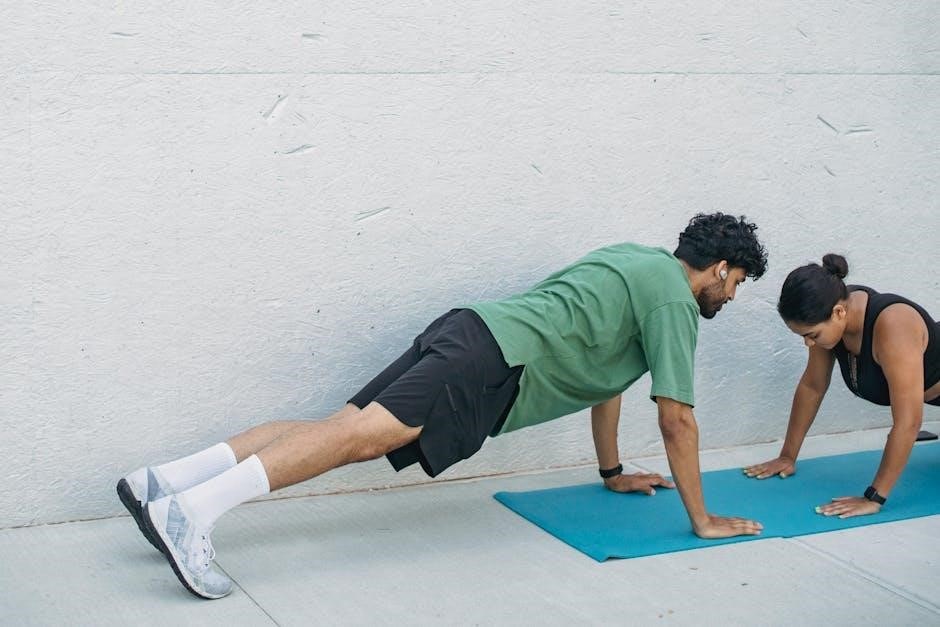
The PDF should emphasize maintaining a slight lean forward to emphasize chest activation, and keeping elbows tucked to protect shoulder joints. Progressive overload, through increased repetitions or added weight, is key. Dips build significant upper body strength and contribute to a well-rounded physique.
Pistol Squats: Advanced Lower Body Challenge
A truly advanced movement for any bodyweight workout program PDF, pistol squats demand exceptional strength, balance, and flexibility. Executed by squatting down on a single leg while extending the other leg forward, they intensely target quads, glutes, and hamstrings. This exercise isn’t for beginners; a solid foundation of regular squats is crucial.
The PDF should detail progressions like assisted pistol squats (holding onto support) and box pistol squats. Proper form – maintaining a straight back and controlled descent – is paramount to prevent injury; Mastering pistol squats signifies significant lower body development.
Creating a Bodyweight Workout PDF Program
Designing a successful bodyweight workout program PDF requires thoughtful planning. Begin by assessing your current fitness level and defining clear, achievable goals. A well-structured PDF will outline a progressive overload system, gradually increasing exercise difficulty or volume over time. Consider incorporating varied routines to prevent plateaus and maintain engagement.
The PDF should detail weekly schedules, specifying exercise selection, sets, reps, and rest periods. Prioritize proper form over quantity. Include sections for warm-up and cool-down routines. Tracking progress – noting completed workouts and personal bests – is vital for motivation and long-term success.
Structuring Your Weekly Routine
A balanced bodyweight workout program PDF benefits from a structured weekly routine. Aim for 3-5 workouts per week, allowing for adequate recovery between sessions. Alternate between upper body, lower body, and full-body workouts to ensure comprehensive muscle engagement. Consider a split routine – for example, Monday/Wednesday/Friday – or full-body sessions every other day.
Your PDF should clearly define each workout’s focus. Incorporate rest days for muscle repair and prevent overtraining. Vary intensity; include high-intensity interval training (HIIT) alongside strength-focused sessions. Remember, consistency is key; a sustainable routine yields better results than sporadic, intense bursts.
Setting Realistic Goals and Tracking Progress
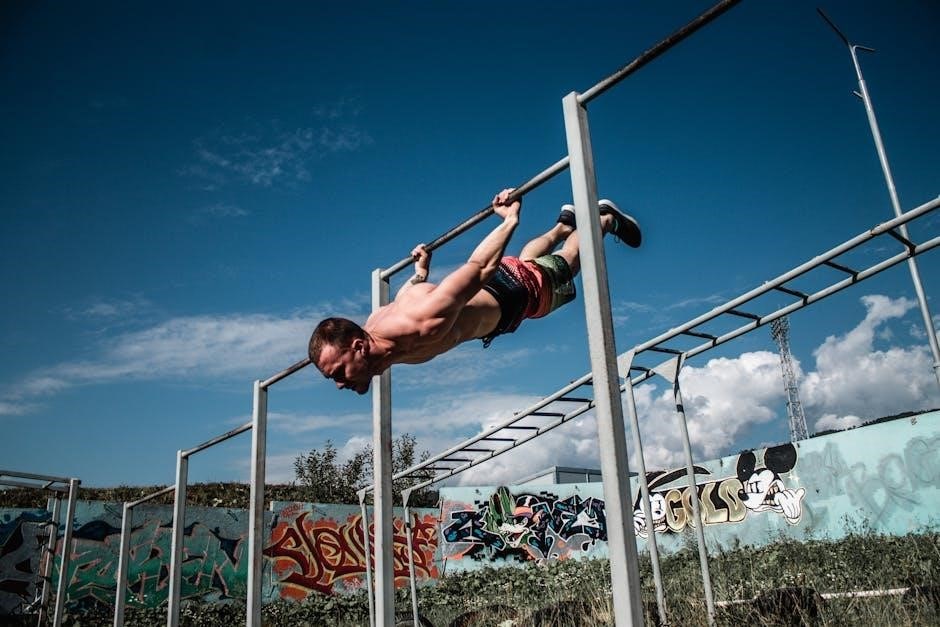
Your bodyweight workout program PDF should emphasize realistic goal setting. Begin with achievable targets – perhaps increasing push-up repetitions or holding a plank for longer. Avoid overwhelming yourself with ambitious goals initially. Track your progress diligently; a workout journal or app is invaluable. Note sets, reps, and any modifications used.
Regularly assess your improvements. This provides motivation and highlights areas needing attention. A PDF format allows for easy printing of progress trackers. Celebrate milestones, no matter how small! Adjust your goals as you get stronger, ensuring continued challenge and preventing plateaus. Consistent tracking fuels long-term success.
Sample Bodyweight Workout Routines
A well-structured bodyweight workout program PDF includes routines for varying fitness levels. Beginner routines might focus on foundational movements like squats, push-ups (on knees if needed), and planks, performed for 2-3 sets of 8-12 repetitions. Intermediate routines introduce more challenging exercises, such as lunges, incline push-ups, and longer plank holds – 3-4 sets of 10-15 reps.
Advanced routines could incorporate pistol squats, decline push-ups, and pull-ups (or assisted variations). Your PDF should clearly outline each exercise with proper form guidance. Remember to prioritize quality over quantity, and adjust routines based on individual progress.
Beginner Level Routine
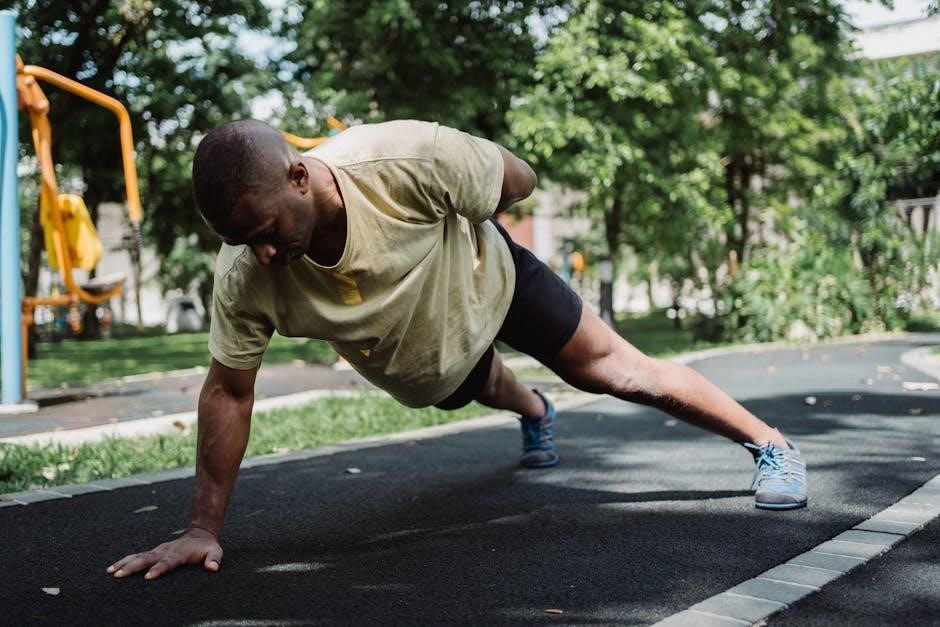
This bodyweight workout program PDF beginner routine builds a foundation. Perform 3 sets of each exercise with 60 seconds rest between sets. Start with: Squats (10 reps), Knee Push-ups (8 reps), Plank (30 seconds hold), Lunges (10 reps per leg), and Glute Bridges (12 reps).
Focus on proper form – prioritize controlled movements over speed. Modify exercises as needed; for example, perform push-ups against a wall. Consistency is key! Aim for 2-3 sessions per week, with rest days in between. This routine establishes strength and prepares you for more advanced exercises detailed in your PDF.
Intermediate Level Routine
Progressing from the beginner level, this bodyweight workout program PDF routine demands more. Complete 3-4 sets of each exercise, resting 45-60 seconds between sets. Include: Standard Push-ups (12 reps), Squats (15 reps), Walking Lunges (12 reps per leg), Plank (45-60 seconds hold), and Dips using a chair (10 reps).
Introduce variations like incline push-ups or jump squats. Focus on maintaining form throughout. Aim for 3-4 workouts weekly, incorporating active recovery days. This routine builds strength, endurance, and prepares you for advanced movements outlined within the complete PDF guide.
Cool-down and Stretching
A crucial component of any bodyweight workout program PDF is the cool-down. Following your workout, dedicate 5-10 minutes to gradually lower your heart rate. Begin with light cardio, like walking in place. Static stretching is then essential, holding each stretch for 30 seconds.
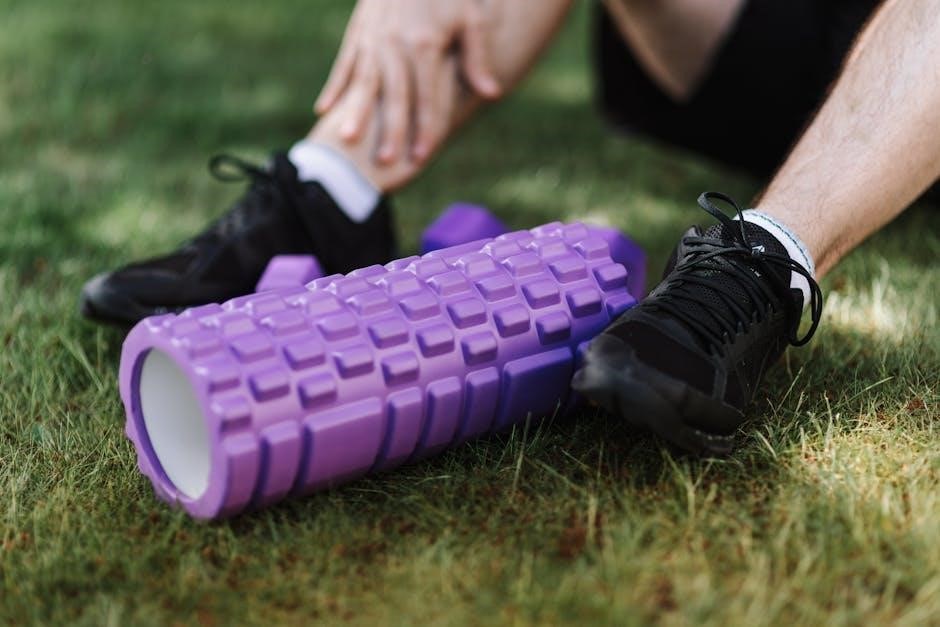
Focus on major muscle groups worked – quads, hamstrings, chest, back, and shoulders. Examples include hamstring stretches, quad stretches, tricep stretches, and shoulder rotations. Proper cool-down and stretching enhance flexibility, reduce muscle soreness, and aid recovery, maximizing the benefits of your PDF program.
Nutrition for Optimal Results
To truly maximize the benefits of your bodyweight workout program PDF, nutrition plays a vital role. Prioritize a balanced diet rich in protein to support muscle repair and growth. Complex carbohydrates provide sustained energy for workouts, while healthy fats are essential for overall health.
Hydration is key – drink plenty of water throughout the day, especially before, during, and after exercise. Focus on whole, unprocessed foods like fruits, vegetables, lean proteins, and whole grains. Avoid excessive sugar and processed foods. Proper nutrition fuels your workouts and accelerates recovery, complementing your PDF program’s effectiveness.
Avoiding Injuries During Bodyweight Training
Safety is paramount when following a bodyweight workout program PDF. Always prioritize proper form over speed or repetitions. A thorough warm-up prepares your muscles, reducing injury risk. Listen to your body and don’t push through pain; modify exercises if needed.
Progress gradually, increasing intensity and volume over time. Ensure adequate rest and recovery between workouts to allow muscles to repair. Consider incorporating mobility work and stretching to improve flexibility and range of motion. Ignoring these precautions can lead to strains, sprains, or more serious injuries, hindering your progress.
Resources for Bodyweight Workout PDFs
Numerous online platforms offer bodyweight workout program PDFs. Many websites provide free PDF workout plans catering to various fitness levels, offering a great starting point. Explore options like fitness blogs and dedicated workout websites for downloadable routines.
For more structured and comprehensive programs, consider paid bodyweight program options. These often include detailed instructions, video demonstrations, and personalized support. Platforms like Hobbycraft (though primarily crafts) demonstrate accessible learning resources, mirroring how quality fitness PDFs present information. Remember to evaluate the source’s credibility before committing to any program.
Free PDF Workout Plans Online
The internet boasts a wealth of free PDF workout plans focused on bodyweight training. Numerous fitness blogs and websites offer downloadable routines for beginners to advanced levels. These resources often categorize workouts by muscle group or fitness goal, providing flexibility.
While convenient, assess the source’s credibility. Look for plans created by certified trainers or reputable fitness organizations. Remember, quality varies significantly. Similar to Hobbycraft’s accessible craft tutorials, well-designed PDFs will include clear instructions and exercise demonstrations. Utilize these free resources to build a foundation and explore different workout styles before investing in paid programs.
Paid Bodyweight Program Options
For a more structured and comprehensive approach, consider paid bodyweight workout programs available online. These often offer progressive training plans, detailed video instruction, and personalized support – similar to the expert demonstrations found on Hobbycraft TV.
Many platforms provide tiered subscriptions, catering to different budgets and fitness levels. Benefits include professionally designed routines, nutritional guidance, and access to a community for motivation. While requiring an investment, these programs can accelerate progress and ensure proper form, minimizing injury risk. Research thoroughly and read reviews before committing to a paid option.


Be the first to reply