IT Band Syndrome (ITBS) demands a focused exercise approach. A comprehensive program, often detailed in an ITB exercises PDF, combines stretching, strengthening, and endurance work.
Effective treatment, as highlighted by resources like Harvard Health, centers on targeted exercises. These routines aim to correct underlying causes, frequently linked to hip weakness.
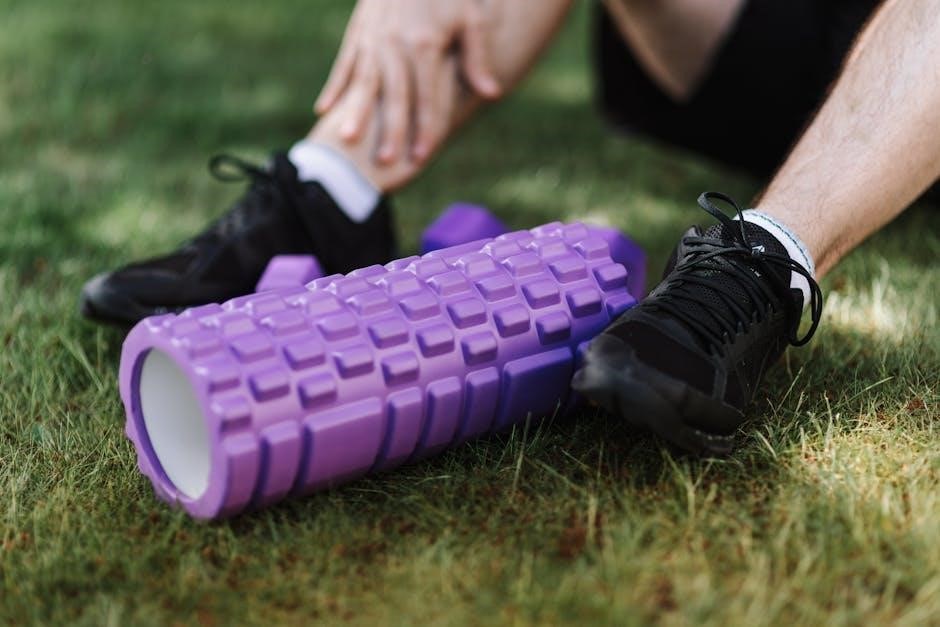
Home therapy, utilizing a PDF guide, empowers individuals to manage ITBS. Foam rolling and massage tools complement the core exercises for optimal recovery.

What is the Iliotibial (IT) Band?
The iliotibial (IT) band is a thick band of fibrous tissue that runs along the outside of the thigh, extending from the hip to just below the knee. It’s crucial to understand its function when considering an ITB exercises PDF, as many exercises target its surrounding muscles. It’s not a muscle itself, but rather a reinforcement for the thigh muscles.
Its primary role is to stabilize the knee and hip during running and walking. However, the IT band can become tight and inflamed, leading to IT Band Syndrome (ITBS). An effective ITB exercises PDF will address this tightness through targeted stretching and strengthening.
Understanding that ITBS isn’t always about the band itself, but often related to weaknesses in the hip and core, is vital. Therefore, a well-structured program, like those found in a detailed PDF, will incorporate exercises to address these underlying issues. Correcting these imbalances is key to long-term relief and prevention.
Understanding ITBS: Causes and Symptoms
Iliotibial Band Syndrome (ITBS) arises from friction between the IT band and the lateral femoral epicondyle (the bony prominence on the outside of the knee). An ITB exercises PDF should acknowledge this friction as the core issue, guiding users toward solutions. Common causes include overuse, improper training techniques, and anatomical factors like leg length discrepancies.
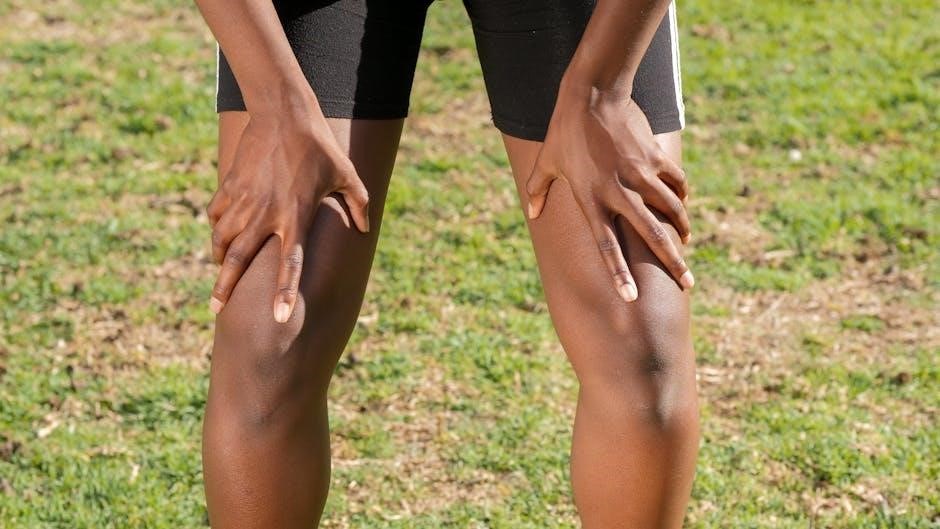
Symptoms typically manifest as pain on the outside of the knee, often worsening during or after activity. Pain may radiate up the thigh. A comprehensive ITB exercises PDF will emphasize early intervention to prevent chronic pain.
Frequently, ITBS is linked to hip weakness, as highlighted in rehabilitation resources. Therefore, an effective PDF program won’t solely focus on the IT band, but will include hip strengthening exercises. Recognizing these contributing factors is crucial for successful treatment and prevention, making a detailed PDF invaluable.
Why Exercise is Crucial for ITBS Recovery
Exercise is paramount in IT Band Syndrome (ITBS) recovery, and a well-structured ITB exercises PDF is the cornerstone of effective rehabilitation. Simply resting doesn’t address the underlying biomechanical issues causing the friction. Targeted exercises correct muscle imbalances, particularly hip weakness, a frequently cited contributor to ITBS.
An ITB exercises PDF should outline a progressive program, starting with gentle stretches and gradually incorporating strengthening exercises. This approach rebuilds strength and endurance in the supporting muscles, reducing stress on the IT band.
Harvard Health emphasizes preventing recurrence through consistent exercise. A PDF provides a readily accessible, personalized plan. Ignoring exercise can lead to chronic pain and limited activity. Therefore, a comprehensive, PDF-based exercise regimen is not merely helpful, but essential for long-term ITBS management and a return to pain-free movement.
Stretching Exercises for ITBS Relief

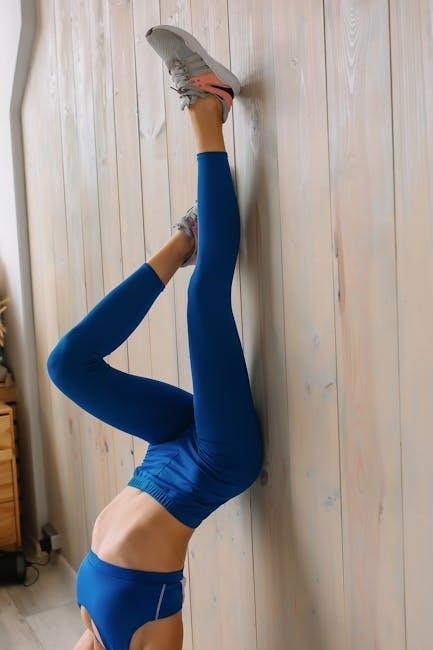
Stretching, detailed in an ITB exercises PDF, is vital for ITBS relief. Focus on the IT band, hip flexors, and quadriceps to restore flexibility and reduce tension.

IT Band Stretch – Standing Variation
The Standing IT Band Stretch, often illustrated within an ITB exercises PDF, is a foundational exercise for relieving tension. Begin by standing upright, with your affected side facing away from a stable support – a wall or chair works well.
Cross the leg opposite your affected side behind your affected leg. Gently lean towards the affected side, reaching with your hand towards that foot or shin. You should feel a stretch along the outside of your hip and thigh.
Hold this stretch for approximately 30 seconds, ensuring you maintain a straight back and avoid rounding your shoulders. Repeat 2-3 times on each side. Proper form, as demonstrated in the PDF, is crucial to avoid exacerbating the condition.
Remember to breathe deeply throughout the stretch, and avoid pushing yourself beyond a comfortable range of motion. This stretch targets the IT band directly, promoting flexibility and reducing discomfort.
IT Band Stretch – Lying Down Variation
The Lying Down IT Band Stretch, frequently detailed in an ITB exercises PDF, offers a gentler approach to IT band lengthening. Begin by lying on your side with your affected leg extended straight. The unaffected leg can be bent for stability.
Reach across your body with the hand on the same side as the affected leg, and gently pull your foot towards your opposite hip. Keep your shoulders relaxed and flat on the ground throughout the stretch.
You should feel a stretch along the outside of your hip and thigh. Hold this position for 30 seconds, repeating 2-3 times on each side. The PDF often includes visual cues for correct alignment.
This variation is particularly useful for those with limited mobility or balance. Focus on a slow, controlled movement and avoid bouncing. Consistent practice, guided by the PDF, aids in restoring IT band flexibility.
Hip Flexor Stretch (Psoas Stretch)
The Hip Flexor Stretch (Psoas Stretch), a crucial component often found within an ITB exercises PDF, addresses a common contributor to ITBS – tight hip flexors. Begin in a half-kneeling position, with one knee on the ground and the other foot flat on the floor in front of you.
Gently push your hips forward, maintaining a straight back and engaged core. You should feel a stretch in the front of your hip and thigh of the kneeling leg; Avoid arching your lower back.
Hold this stretch for 30 seconds, repeating 2-3 times on each side. The PDF may illustrate variations, such as reaching the arm on the same side overhead to deepen the stretch.
Tight hip flexors can pull the pelvis into an anterior tilt, increasing stress on the IT band. Regularly performing this stretch, as outlined in the PDF, helps restore proper hip alignment and alleviate ITBS symptoms.
Quadriceps Stretch
The Quadriceps Stretch is a foundational exercise detailed in many ITB exercises PDF guides, targeting the muscles on the front of the thigh. Tight quadriceps can exacerbate ITBS by increasing tension along the IT band.
Stand tall, holding onto a stable surface for balance if needed. Bend one knee, bringing your heel towards your glutes. Reach back with the same-side hand and grasp your foot or ankle.
Gently pull your heel closer to your glutes, feeling a stretch in the front of your thigh. Keep your knees aligned and avoid twisting your body. Hold the stretch for 30 seconds, repeating 2-3 times on each leg.
An ITB exercises PDF might showcase variations, like lying prone and performing the stretch. Consistent quadriceps stretching, as prescribed, promotes flexibility and reduces IT band strain, aiding in recovery.
Strengthening Exercises for ITBS Prevention
Strengthening is key, as outlined in an ITB exercises PDF. Focus on hip and glute muscles to stabilize the pelvis and reduce IT band stress.
Hip Abduction Exercises (Side Leg Raises)
Side leg raises are a foundational exercise detailed within a comprehensive ITB exercises PDF, crucial for strengthening the hip abductors – primarily the gluteus medius. This muscle plays a vital role in stabilizing the pelvis during single-leg stance, a common trigger for ITBS.
How to Perform: Lie on your side with legs extended and stacked. Keeping your leg straight, slowly lift it towards the ceiling, focusing on engaging the gluteus medius. Avoid rotating your hip or leaning forward/backward. Slowly lower the leg back to the starting position.
PDF Guidance: An effective PDF will illustrate proper form and suggest starting with 3 sets of 10-15 repetitions. Progression involves adding ankle weights or resistance bands. Correcting hip weakness, as emphasized in rehabilitation resources, is the primary goal. Maintaining controlled movements prevents compensation and maximizes effectiveness. This exercise directly addresses a common cause of IT band syndrome.
Gluteus Medius Strengthening (Clamshells)
Clamshells are a key exercise frequently included in an ITB exercises PDF, specifically targeting the gluteus medius. Strengthening this muscle is paramount, as hip weakness is a frequently cited contributor to Iliotibial Band Syndrome (ITBS). This exercise promotes pelvic stability during movement.
How to Perform: Lie on your side with knees bent and feet stacked. Keeping your feet together, lift your top knee, maintaining a clamshell-like opening. Focus on squeezing your glutes throughout the movement. Avoid arching your back or rotating your pelvis.
PDF Integration: A well-structured PDF will detail starting with 3 sets of 15-20 repetitions. Progression can involve adding a resistance band around the thighs. Resources emphasize controlled movements and proper form to maximize gluteus medius activation. Correcting this weakness, as highlighted in ITBS rehabilitation, is crucial for long-term relief and prevention.
Glute Bridges
Glute Bridges are a foundational exercise often detailed within a comprehensive ITB exercises PDF. Strengthening the gluteal muscles – gluteus maximus, medius, and minimus – is vital for addressing the hip weakness commonly associated with Iliotibial Band Syndrome (ITBS). This exercise improves hip extension and overall lower body stability.
How to Perform: Lie on your back with knees bent and feet flat on the floor. Engage your core and glutes, then lift your hips off the ground, forming a straight line from shoulders to knees. Squeeze your glutes at the top of the movement and slowly lower back down.
PDF Guidance: An effective PDF program will typically recommend 3 sets of 12-15 repetitions. Progression can include adding a resistance band around the thighs or performing single-leg glute bridges. Correct form, focusing on glute activation, is emphasized to maximize benefits and prevent compensatory movements, aligning with ITBS rehabilitation principles.
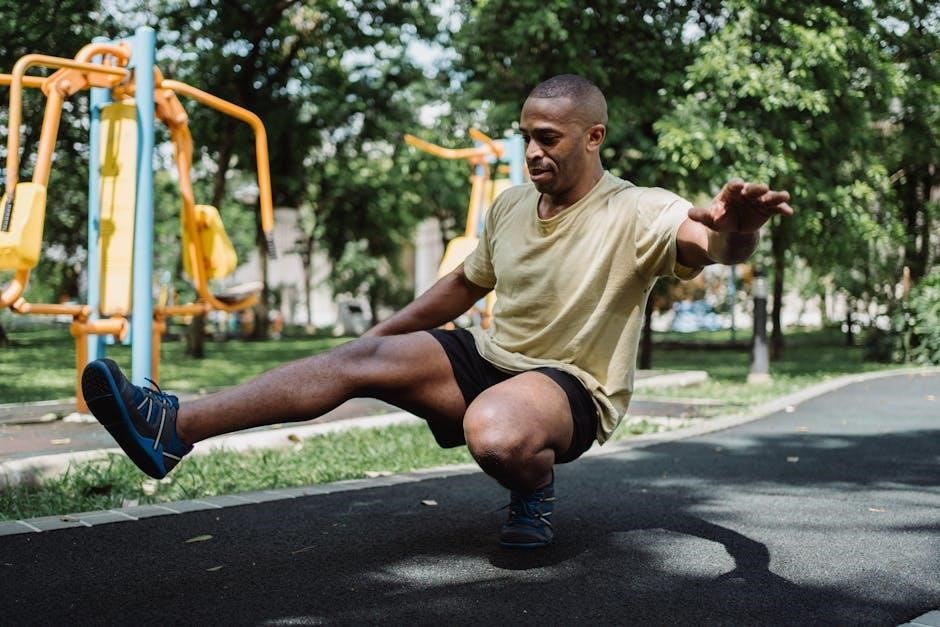
Single Leg Squats
Single Leg Squats represent a more advanced exercise frequently included in a detailed ITB exercises PDF. They directly address hip and core stability, crucial elements in correcting the biomechanical imbalances contributing to Iliotibial Band Syndrome (ITBS). This exercise challenges balance and strengthens the gluteus medius, a key muscle for hip control.
Proper Form: Stand on one leg, keeping the other lifted. Slowly lower your body as if sitting back into a chair, maintaining a straight back and controlled descent. Ensure your knee tracks over your ankle and avoid letting it collapse inward. Return to the starting position.
PDF Recommendations: A well-structured PDF will likely suggest starting with assisted single leg squats (holding onto a support) and progressing to unassisted versions. Typically, 3 sets of 8-12 repetitions per leg are advised. Focus on controlled movements and proper alignment, mirroring the principles of ITBS rehabilitation.

Endurance & Stability Exercises
Endurance and stability are vital, often detailed in an ITB exercises PDF. Exercises like side planks and bird dogs build core strength, supporting hip alignment and ITBS recovery.
Side Plank
The Side Plank is a foundational exercise frequently included in an ITB exercises PDF, crucial for building lateral stability. This exercise directly addresses the weakness often contributing to Iliotibial Band Syndrome (ITBS). To perform, lie on your side with your elbow directly beneath your shoulder and your legs extended.
Lift your hips off the ground, forming a straight line from head to feet. Engage your core throughout the movement, preventing hip sagging. Hold this position for 30-60 seconds, gradually increasing the duration as your strength improves. Modifications include performing the exercise with your knees bent for reduced intensity.
Focus on maintaining proper form to maximize effectiveness and prevent injury. The side plank strengthens the gluteus medius and oblique muscles, vital for hip control and reducing stress on the IT band. Consistent practice, as outlined in a comprehensive PDF program, is key to long-term ITBS management and prevention.
Bird Dog Exercise
The Bird Dog Exercise is a core and stability movement often featured within a detailed ITB exercises PDF. It’s designed to improve core strength and coordination, indirectly supporting IT band health by enhancing pelvic and spinal stability. Begin on your hands and knees, ensuring your hands are shoulder-width apart and knees are hip-width apart.
Simultaneously extend one arm forward and the opposite leg backward, maintaining a straight line from hand to heel. Avoid arching your back or rotating your hips. Hold for a few seconds, then return to the starting position and repeat on the other side.
Focus on controlled movements and engaging your core throughout the exercise. This exercise strengthens the lower back, glutes, and abdominal muscles, contributing to better biomechanics and reduced IT band strain. A well-structured PDF program will detail proper form and progression for optimal results.
Core Strengthening for ITBS
Core strengthening is a fundamental component of any effective ITB exercises PDF. A strong core provides a stable base for movement, reducing stress on the IT band and improving overall biomechanics. Weak core muscles contribute to imbalances that can exacerbate ITBS symptoms.
Exercises included in a comprehensive PDF will typically focus on engaging the deep abdominal muscles, obliques, and lower back. These exercises aren’t about building visible abs; they’re about creating a supportive “cylinder” around your spine.
Planks, side planks (discussed elsewhere), and variations of the Bird Dog exercise are commonly prescribed. Proper form is crucial – focus on maintaining a neutral spine and avoiding excessive arching or rounding of the back. A progressive program within the PDF will gradually increase the difficulty and duration of these exercises.

Foam Rolling & Self-Massage Techniques
An ITB exercises PDF often includes foam rolling and self-massage. These techniques release tension in the IT band, quads, and surrounding muscles, aiding recovery and flexibility.
Foam Rolling the IT Band
Foam rolling the IT band, as detailed in many ITB exercises PDF guides, is a crucial self-massage technique. Begin by lying on your side with the foam roller positioned under your outer thigh. Support your body weight with your forearm and the top leg.
Slowly roll from just above the knee to the hip, pausing on any tender spots for 20-30 seconds. This isn’t about enduring intense pain, but applying consistent pressure. Controlled movements are key; avoid rapid rolling.
Remember, the IT band itself isn’t the primary issue; tightness often stems from surrounding muscles. Therefore, focus on areas around the band. Supplement with rolling the quadriceps and glutes for a more holistic approach. Consistent application, guided by your ITB exercises PDF, yields the best results.
Proper form and gradual progression are essential to prevent further irritation.
Foam Rolling the Quadriceps
Foam rolling the quadriceps is a vital component of an ITB exercises PDF program, often overlooked but crucial for addressing ITBS. Lie prone (on your stomach) with the foam roller positioned under your thighs. Support your weight with your forearms.
Slowly roll from just above the knees to the hip flexors, pausing on tender spots for 20-30 seconds. This helps release tension in the quads, which can contribute to IT band tightness; Maintain controlled movements, avoiding quick, jerky motions.
Remember, the goal isn’t to find the most painful spot, but to apply sustained pressure. Integrating quad foam rolling, as outlined in your ITB exercises PDF, complements IT band rolling for comprehensive muscle release.
Consistent application and proper technique are key to maximizing benefits and preventing further discomfort.
Using a Massage Gun for IT Band Release
A massage gun offers a targeted approach to IT band release, often detailed within a comprehensive ITB exercises PDF. Begin by selecting a moderate speed and attachment. Gently apply the massage gun along the IT band, starting above the knee and moving upwards towards the hip.
Avoid direct application over bony prominences. Focus on the muscle tissue itself, using slow, controlled movements. Spend 30-60 seconds on each area, pausing on particularly tender spots. The percussive therapy helps break up adhesions and improve blood flow.
Your ITB exercises PDF should emphasize that a massage gun isn’t a replacement for stretching and strengthening, but a valuable adjunct. It’s best used before or after exercise to prepare the muscles or aid recovery.
Always follow the manufacturer’s instructions and listen to your body, stopping if you experience any pain.

Creating a Comprehensive ITBS Exercise PDF Program
A well-structured ITB exercises PDF should integrate stretching, strengthening, and endurance routines. It’s vital for consistent home therapy, aiding recovery and prevention.
Sample ITBS Exercise Routine (PDF Structure)
A robust ITB exercises PDF should begin with a clear introduction to IT Band Syndrome, outlining causes and symptoms. The core of the PDF will detail a progressive exercise program, logically structured for optimal results.
Initially, include dynamic stretches like leg swings and torso twists as a warm-up. Follow with static stretches – IT band, quadriceps, and hip flexor holds – each for 30 seconds, repeated three times.
The strengthening section should feature hip abduction (side leg raises), clamshells, and glute bridges, 15 repetitions each, for three sets. Progress to single leg squats, starting with assisted versions.
Endurance and stability are crucial; incorporate side planks (30-60 second holds) and bird dogs (10-12 repetitions per side). A dedicated section on foam rolling – IT band, quads, and glutes – is essential, with clear instructions and visuals.
Finally, the PDF must include important considerations: proper form, listening to your body, and gradual progression. A disclaimer advising consultation with a healthcare professional is also vital.
Progression and Modification of Exercises
An effective ITB exercises PDF emphasizes gradual progression. Initially, focus on mastering proper form with bodyweight exercises before adding resistance. For example, progress side leg raises from lying down to standing, then incorporate ankle weights.
Modifications are key for individual needs. If single-leg squats are too challenging, begin with wall sits or assisted squats using a chair. For hip flexor stretches, adjust the lunge depth based on comfort.
Pain is a signal to modify. Reduce range of motion, decrease repetitions, or switch to a less intense variation. Foam rolling intensity can be adjusted by controlling body weight and speed.
As strength improves, increase sets, repetitions, or resistance. Introduce more challenging variations like banded walks for gluteus medius strengthening. Regularly reassess and adjust the program based on progress and feedback.
The ITB exercises PDF should clearly outline these progression and modification options, empowering users to tailor the program to their specific recovery journey.
Important Considerations & Precautions
A comprehensive ITB exercises PDF must include crucial safety information. Always consult a healthcare professional before starting any new exercise program, especially with existing injuries.
Warm-up adequately before each session with light cardio and dynamic stretches. Proper form is paramount; prioritize quality over quantity to prevent exacerbating the condition.
Listen to your body. Pain during exercise indicates a need to stop or modify the movement. Avoid pushing through sharp or increasing discomfort.
Consistency is vital, but rest and recovery are equally important. Allow adequate time for muscle repair between sessions. The ITB exercises PDF should emphasize a balanced approach.
Be mindful of potential complications. If symptoms worsen despite following the program, seek professional guidance. Hydration and proper nutrition support tissue healing and overall recovery.


Be the first to reply